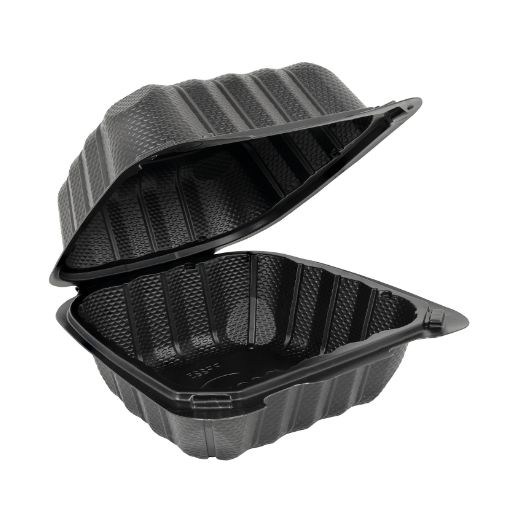
In the present time, when convenience becomes everything, disposable plastic food containers have become a remedy for almost every kitchen and home need. Through such a simple bag, a focus could be set on how these simple items can transform the process of meal preparation and wipe out all sorts of kitchen inadequacies!
Understanding Disposable Plastic Food Containers
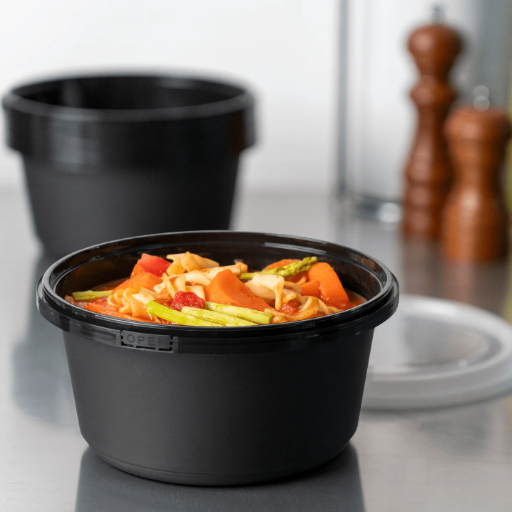
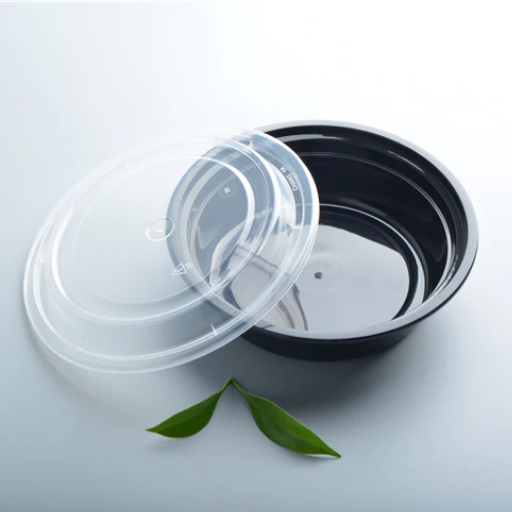
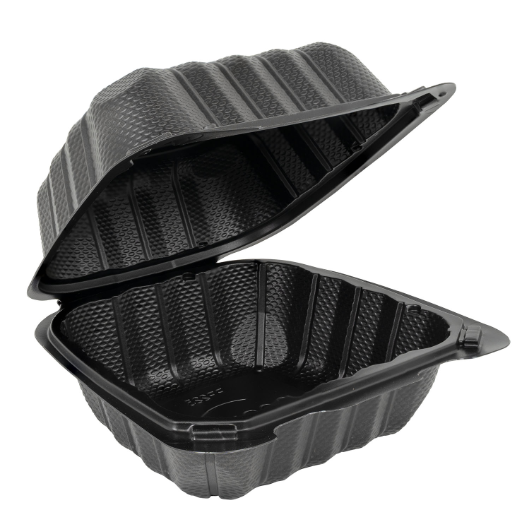
Disposable plastic food containers serve as one-time-use storage solutions. They hold food for transportation and may retain food for some duration. Being generally lightweight, they also remain sturdy enough to hold food; therefore, they are very convenient for packing meals, leftovers, or takeaway food.
Note: Such food containers are typically inexpensive and easy to use. They come in different sizes and shapes to accommodate various food storage needs.
What Are Disposable Food Containers?
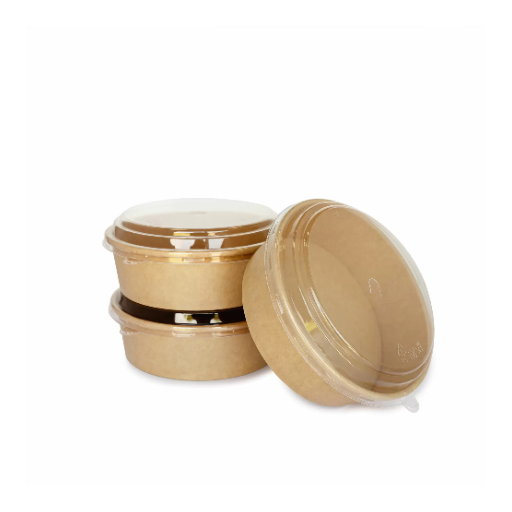
The so-called disposables are mainly designed for the storage or transportation of ready-to-eat food. In commercial and domestic heavy use, these products exist in material forms such as:
- Cardboard
- Plastic
- Aluminum
- Biodegradable substances
Among the features that were most coveted are leak-proof seals, resistance to heat, and microwave compatibility. On the environmentally friendly side, compostable and biodegradable products have lately been the topic of much interest.
Benefits of Using Disposable Plastic Containers
Convenience
Sterile packaging is simply cellophane wrapping. It has the function of retaining the edible product inside it. These are disposable plastic containers intended to keep packaging of these edible products. They come in a large variety of sizes and shapes, suitable for diverse kinds of food: liquid soups and solid foods of varying nature. They should be lightweight and easy to carry so they can be taken away while on the go. They do not require washing, saving time and energy for the user, particularly in busy environments like offices or outdoors.
Cost-Efficiency
These containers are generally quite inexpensive and present an economic choice for institutions and individuals in one-time-use situations, such as catering or takeout services.
Durability
Said containers seem to be resistant: to damage, tears, cracks, and leaks, giving them in return, the ability to contain and safely transport food.
Maintenance of Food Quality
A majority of plastic containers are airtight, helping to preserve food freshness for longer periods of time, preserving flavor, and averting spoilage.
Versatility
They are, however, available in a large variety of sizes and shapes and are favorable for all kinds of food: liquid soups and solid foods of varying nature.
Types of Disposable Food Containers
| Type | Material | Key Feature | Use Case | Eco-Friendly |
|---|---|---|---|---|
| Plastic | Plastic | Durable | Liquids/Solids | No |
| Paper | Paper | Lightweight | Dry Foods | Yes |
| Aluminum | Aluminum | Heat-Resistant | Hot Foods | No |
| Foam | Polystyrene | Insulating | Hot/Cold Foods | No |
| Biodegradable | Plant-Based | Compostable | All Food Types | Yes |
| Compostable | Organic | Environmentally Safe | All Food Types | Yes |
Exploring Meal Prep Containers
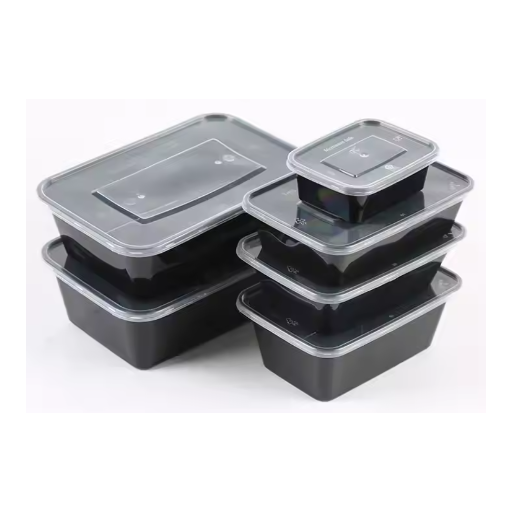
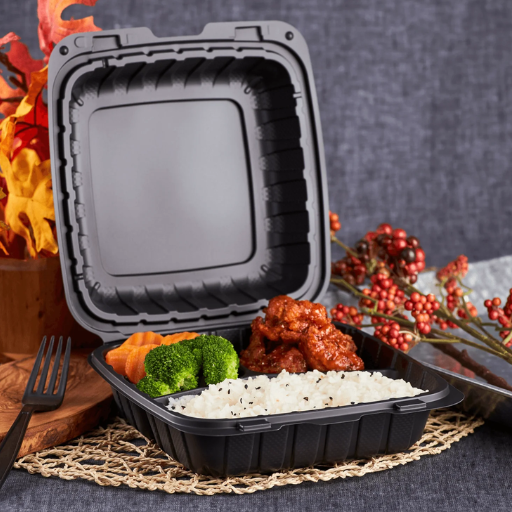
Meal prep containers are meant for easy storing, organizing, and transferring pre-packed meals. These containers may be made of usual BPA-free plastic, glass, or stainless steel, bearing an assortment of sizes and compartments to satisfy the variances in portion needs.
Key Features of Meal Prep Containers:
- Multiple Compartments for Composing Meals Balanced for One Person
- Sturdy Construction for Reuse
- Microwaving and Freezing Allowed
- Dishwasher Safe
- For the Regulation of Portions
Microwave Safe Meal Prep Containers
The containers are specially designed to withstand microwave heat without distorting or releasing harmful substances into food. These can be made of:
- BPA-free plastic
- Tempered glass
- Food-grade silicone
Convenience Factor: These microwaveable containers make meal planning simple because there’s no need to transfer food from the fridge or freezer to another dish before heating it in the microwave.
Reusable Meal Prep Containers
Meal prep containers are an apparent investment for various reasons.
- Put on the list, reusable containers are eco-friendly alternatives to single-use plastics.
- They save you money, considering that they can be used over time.
- They keep the food fresh, thereby lessening its susceptibility to spoilage.
- They help organize daily life, being sturdy and versatile.
Features of Disposable Plastic Food Containers
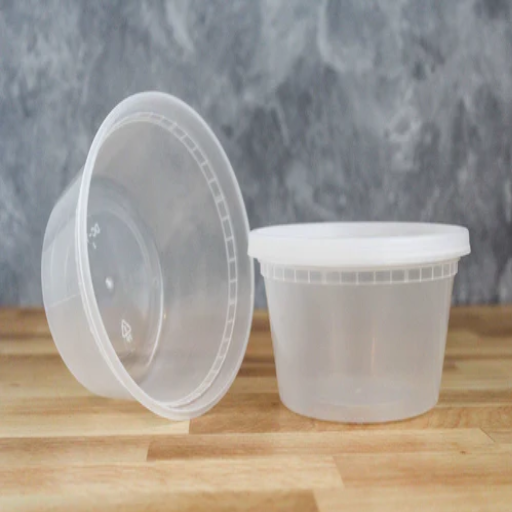
- Lightweight and Portable: Can be held effortlessly for on-the-go requirements.
- Cheap Price: Relatively cheap with options that appeal to different customer bases.
- Variety of Sizes: Different sizes available according to particular portion demands.
- Leak-Lock: Specially shaped lids to ward spills and messes
- Convenient: Single-use and no cleaning is required afterward
- Recycleable: Some are recyclable, hence more environmentally friendly.
Containers with Lids: Importance and Benefits
A container is an essential apparatus utilized in the keeping, transportation, and preservation of food. Researches have recently drawn attention to how these contribute significantly in various industries and even in the life of the common man.
Keeping Freshness
Containers keep food fresh by keeping air, moisture, and microbes from deteriorating the quality of the food. According to food preservation studies, these contain boxes, if airtight, can avert as much as 50 percent of food wastage leading to huge savings for individual households and business establishments.
Stopping Food Wastage
Secure lids give the consumer and businessmen a measure to keep food from being wasted. With a total of 931 million tons (approximately) of food getting wasted every year in the world, better storage methods utilizing containers with secure lids can contribute to solutions.
Convenience for Fast-Paced Lifestyles
Then comes the busy life, fit for rolling. 60% of respondents claim to prep meals and use containers to safely transport meals to work, school, or some other place for outdoor outlets.
Eco-Friendly Developments
The recent trend in containers is driven by an eye towards reuse and environmentally conscious consumers. Environmental search data indicate a 35% increase in searches for “eco-friendly food storage,” suggesting a trend toward green packaging options.
BPA Free Options for Safer Storage
Given the increased safety concerns, there are now chemical-safety and environmental-related concerns, creating a demand for BPA-free food storage items. Search trends for “BPA-free containers” have increased by 40% in recent times.
Safe Alternatives Include:
- Glass containers
- Stainless steel options
- Superior-grade silicone containers
Applications of Disposable Food Containers
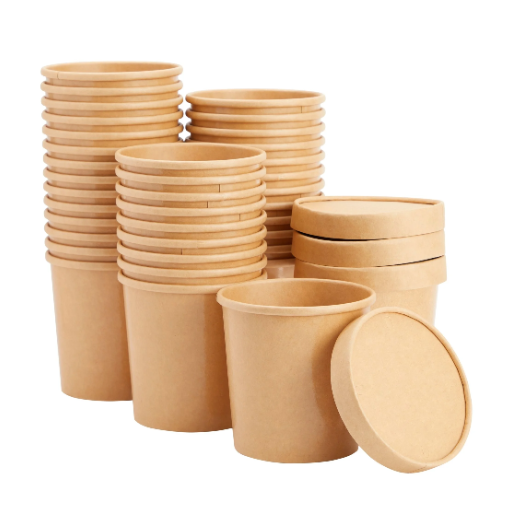
Takeout and Catering Solutions
Disposable food containers have contributed immensely to the evolution of catering and takeout services. Today’s blend of newer technologies leans the option of using biodegradable materials and the best leak-proof designs to keep the food fresher and safer during transit.
Using Deli Containers for Food Storage
The deli container is an ideal food storage solution because:
- Durable and reusable
- Stackable for convenient organization
- Transparent material for easy identification of contents
- Contribute to waste reduction
Market Growth and Trends
According to recent market studies, the global disposable container market is expected to grow at a CAGR of 5.4% between 2022 and 2030. The growth is attributed to:
- Growing demand for food delivery services
- Increase in demand for catering services
- Increasing demand for retail packaging
- An increase in takeout services post-pandemic
Safety Considerations
Recent studies have highlighted essential safety considerations regarding disposable food containers:
Best Practices for Safe Use:
- Choose food-grade certified containers
- Avoid using containers at extremely high temperatures
- Check for BPA-free labeling
- Consider biodegradable alternatives when possible
Frequently Asked Questions (FAQs)
What are disposable plastic food containers?
Disposable plastic food containers are single-use packaging for the storage and handling of food items. These containers are available in different sizes with shapes and are most commonly used for takeout, food trucks, and large events.
Are these disposable plastic bento boxes safe for food-storage?
What lids are there for plastic food containers?
With a plastic food container, there can be snap-on lids, screw-on lids, or tamper-evident lids. The lids keep the contents secure and prevent spilling during their transport.
Are the clear containers suitable for use in meal prep?
Sure, clear containers are great for meal preparation because one can easily see the contents. Many clear containers may be used in the dishwasher or in a microwave.
Are compostable do exist for traditional plastic food containers?
What are the ideal sizes for takeout containers?
The ideal size depends on the kind of food of various types. In general, sizes such as 16 oz for small portions and 32 oz for large meals are being termed standard.
Are disposable plastic food containers reusable?
What should one consider while storing food in plastic containers?
Reference Sources
- “Heavy metal risk of disposable food containers on human health.” (Zeng et al., 2023, p. 114797) (2023): This study assessed the potential health risks associated with heavy metal leaching from disposable food containers. The researchers analyzed leachate samples to determine element levels and assessed potential carcinogenic risks, finding that chronic exposure to nickel and beryllium might pose a non-negligible carcinogenic risk, particularly when containers are used at high temperatures.
- “Analytical techniques for determination of heavy metal migration from different types of locally made plastic food packaging materials using ICP‐MS” (Nguyen et al., 2023, pp. 4030–4037) (2023): This study analyzed heavy metal migration from various plastic food packaging materials using Inductively Coupled Plasma Mass Spectrometry (ICP-MS). The methodology involved validating the ICP-MS method and then measuring the migration of heavy metals (Co, Ge, As, Cd, Sb, Pb, Al, and Zn) into food simulants. The results showed varying levels of metal migration depending on the type of plastic and the food simulant used.
- “Investigation of heavy metal release from variety cookware into food during cooking process” (Shamloo et al., 2023, pp. 8085–8101) (2023): While not solely focused on disposable containers, this study investigated heavy metal release from various cookware, including plastic, into food during cooking. The researchers used ICP-MS to quantify the migration of several heavy metals and found that older, damaged cookware released significantly more heavy metals than newer cookware.
- Leading Disposable Food Container Manufacturers In China
Conclusion
Disposable, plastic food containers continue to find their utility in keeping food storage and transportation off the ground. Convenience has been their primary selling point till now; an evolving industry is on track toward developing sustainable solutions that balance functionality with environmental concern. Whether you are a businessman looking for cost-effective packaging solutions or a busy consumer looking at convenient options to prepare meals for consumption, knowing the different kinds and features available will help in rightly choosing what fits the specific needs of the individual while taking health and environment into consideration.